
2
Edinburgh Welcomes Mary, Queen of Scots, With a Spectacular Royal Entry
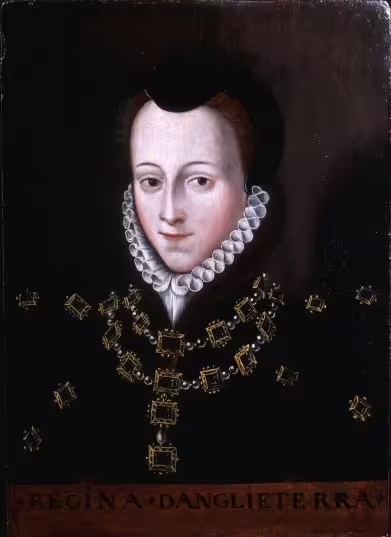
On September 2, 1561, Mary, Queen of Scots, made her ceremonial Royal Entry into Edinburgh. The city welcomed its young queen with elaborate pageants, music, symbolic gifts, theatrical performances, and public celebrations — but beneath the spectacle lay a clear political and religious message.
Mary had returned to Scotland only two weeks earlier after spending much of her childhood and youth in France.
A Young Queen Returns Home
Mary Stuart had been Queen of Scots since infancy, but she was raised largely at the French court.
She married the future King Francis II of France and briefly became Queen of France.
After Francis died in 1560, Mary returned to Scotland in August 1561.
She was only 18 years old.
Scotland Had Changed
The country Mary returned to was very different from the one she had left as a child.
During her years in France, the Protestant Reformation had transformed Scottish politics and religion.
Mary remained a committed Catholic, while many of Scotland's most powerful nobles and towns had embraced Protestantism.
This tension would shape much of her reign.
The Royal Entry Begins
On September 2, 1561, Edinburgh organized a formal Royal Entry to welcome the queen.
Mary travelled from Holyroodhouse toward Edinburgh Castle before processing through the city under a ceremonial canopy.
The streets were decorated and temporary stages had been constructed along the route.
At each stop, performers presented carefully designed scenes filled with symbolism.
An Angel Brings Gifts
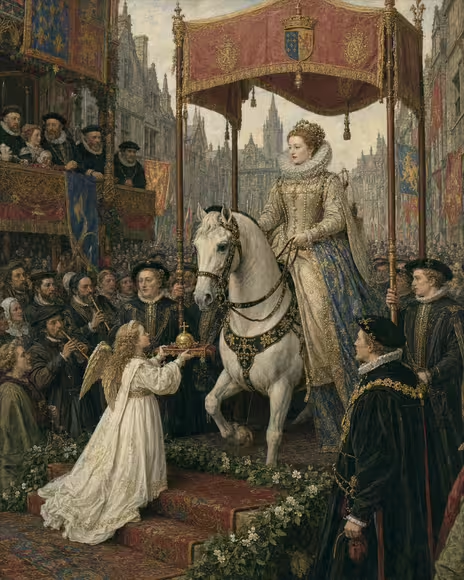
One of the most memorable scenes involved a child dressed as an angel.
The boy descended from an elaborate structure and presented Mary with symbolic gifts from the city.
These included the keys of Edinburgh, a Bible, and a book of Psalms.
The keys represented civic loyalty, while the religious books carried a much more pointed message to Scotland's Catholic queen.
A Celebration With a Protestant Message
The Royal Entry was certainly intended to honor Mary, but Edinburgh's Protestant leaders also used the occasion to make their beliefs clear.
Some of the theatrical displays emphasized biblical stories condemning idolatry and promoting Protestant religious ideals.
The result was an unusual combination of royal celebration and public political advice.
Mary was being welcomed — but she was also being reminded that her capital had changed.
Virtues in the Streets
Other pageants were more traditional.
Performers represented virtues such as Prudence, Justice, Fortitude, and Temperance.
These qualities were presented as ideals for good government and responsible monarchy.
Such allegorical performances were common features of Renaissance royal entries across Europe.
A Fountain Flowing With Wine
Edinburgh also made sure the occasion included more festive attractions.
Near the city's market cross, a fountain was arranged to flow with wine during the celebrations.
Music, costumes, decorations, and public performances turned the streets into a temporary open-air theatre.
For ordinary residents, the arrival of the queen was a rare opportunity to witness royal spectacle at close range.
The Politics Behind the Pageantry
Royal Entries were never simply entertainment.
Cities used them to communicate directly with monarchs.
Every gift, costume, biblical scene, and allegory could carry a political meaning.
Edinburgh's celebration therefore reflected both loyalty to Mary and anxiety about how a Catholic queen would govern a Protestant kingdom.
Mary and John Knox
The religious tension became even clearer only two days later.
On September 4, 1561, Mary met the influential Protestant reformer John Knox.
Their conversations became famous for the sharp disagreements between them over religion, royal authority, and the role of women in politics.
The encounter showed how quickly the symbolic messages of the Royal Entry became real political disputes.
A Queen Between Two Worlds
Mary had been shaped by the sophisticated Catholic court of Renaissance France.
Scotland, meanwhile, was moving rapidly toward Protestant institutions and a very different political culture.
Her Royal Entry into Edinburgh revealed this contrast in a single day.
She was honored as a queen, but also confronted with the expectations of a society she barely knew.
A Spectacle With a Warning
On September 2, 1561, Edinburgh gave Mary, Queen of Scots, a magnificent public welcome.
The procession offered music, theatre, symbolism, civic gifts, and celebration.
But hidden within the pageantry was an unmistakable message: Scotland had changed during Mary's years abroad, and her reign would require careful negotiation between royal authority, religion, and political power.
The Royal Entry remains a vivid example of how Renaissance cities could turn an entire street into both a celebration and a political statement.
Other events on this day
- Frederick Soddy, the Scientist Who Gave Isotopes Their Name, Is Born
- The Woman Who Would Become Empress Shōken Is Chosen as Meiji's Bride
Credits: 1st photo is portrait by the Franco-Scottish School, after a likeness by François Clouet — Public Domain / Wikimedia Commons.